Before the Day Trip: How the Leisure Excursion Took Shape
The leisure excursion turned travel into a shared day out. See how its timetables and group plans shaped the looser outings we make now.
The common mistake is to treat a day trip as a small holiday with a long history. The leisure excursion was a more particular sort of outing: a planned departure, a shared journey and a set return, often organised by someone other than the traveller. Its legacy is not a grand story of progress so much as a useful contrast: the old pleasure of having a day arranged, and the present pleasure of deciding where to leave it loose.
The leisure excursion made a day out feel like an occasion
A leisure excursion was a journey away from home for pleasure rather than work, with the transport and timing built into the event. People might travel by rail, coach or boat, joining a special service or a trip arranged by a club, employer, association or commercial organiser.
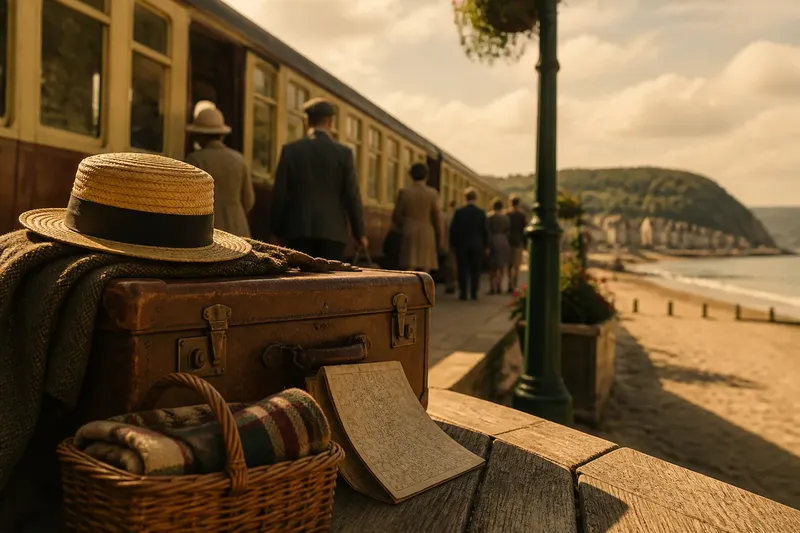
The journey could be part of the attraction. A shared carriage, a view from the window or the novelty of travelling together made the route more than a way to reach a beach, park, seaside resort or place of interest. The timetable gave the day a shape: meet, depart, enjoy the destination and return.
It was not simply a picnic with a ticket. It joined transport and leisure in a single plan, even when passengers brought their own food and made their own entertainment.
Transport and organisers shaped the outing
In places where passenger railways and other organised services were available, operators could run trips aimed at leisure travellers as well as those travelling for work or business. A special service or fare could bring a group to a destination, while a club or community organiser gathered passengers and set the return time. The details varied by place and period; there was no single route by which the excursion became common.
The appeal was often modest. An outing to open air, water or a resort offered a change from familiar streets and routines. What counted as a good day depended on the people travelling, the destination and the arrangements available to them.
Workplaces, churches, friendly societies, clubs and community groups could all arrange outings. Commercial operators might promote a destination and sell the transport as part of the convenience. Each organiser made the day easier to join, while also deciding who travelled together and how much freedom the schedule allowed.
Say a local society plans a fictional trip to a coastal town. It gathers names, books shared transport and announces a return departure. Members can join without arranging the journey themselves; the observable trade-off is a simpler shared plan but little room to miss the agreed return.
Why does the leisure excursion still feel familiar?
The old format has a simple appeal: it removes some decisions. Someone else chooses the departure, the destination and the time to come home. That can suit a group that wants to spend its attention on company rather than on connections, parking or which turn to take.
It also has an obvious limit. A fixed plan can make a late lunch or an unexpected wander difficult to fit in. The attraction of a self-directed outing is not that it is inherently better; it is that you can decide where a little structure helps and where it becomes an inconvenience.
Today’s day trip leaves more of the plan to you
A day trip usually means going somewhere for leisure and returning home the same day, without an overnight stay. It can be a coach visit to a garden, a train ride to a market town or a drive to a park. The term describes the shape of the outing, not a particular distance or transport method.
In places with suitable services and roads, travellers can choose among more ways to make a day out than a single organised excursion. A local train and a walk may suit one plan; a coach can be simpler when a group wants to travel together. Cars can make stops easier to adjust, though the driver still has to manage the route and return journey. None of these options removes the need to check practical details such as the final service home or access at the destination.
Imagine you want a fictional Saturday at a riverside garden, starting from a town with a direct train and a coach excursion to the same place. You prefer to browse at your own pace, so you choose the train, check the return timetable and leave the afternoon open. The result is a looser visit with a clear way home; if you were travelling with a group that valued one shared departure, the coach would offer more structure at the cost of that freedom.
Questions travellers ask about the leisure excursion?
Is an excursion different from a day trip?
An excursion usually suggests an organised journey, often with a group or planned service. A day trip is broader and can describe any leisure outing that returns home the same day.
Were leisure excursions accessible to everyone?
Access depended on local transport, the cost and the particular arrangements. Group travel could make some journeys easier to organise, but it did not make every destination or outing equally available.
Why did people travel together?
Shared transport reduced the work of arranging a journey and made the outing a social event. The company could matter as much as the destination, which is a respectable use of a timetable.
What is the main difference between an excursion and a flexible day out?
An excursion tends to have an organiser, a shared schedule and a planned return. A self-directed day out leaves the traveller more choices about route and pace, while requiring them to handle the details.
A little structure can still be the useful part
When planning a day out, check the detail most likely to constrain your choices: the last practical journey home, the distance between a station and the destination, or whether the group needs to stay together. If those details are settled, you can leave the rest of the day pleasantly undecided. The leisure excursion remains a useful model when you want company and an easy plan; a looser day trip suits a day whose best moments may not keep to the timetable.